Showing posts with label Australia. Show all posts

Saturday, December 31, 2016

Top dos posts mais lidos 2016 de Geração Verde : #semestre2


2017 está aí. As férias de Natal terminam dentro de dias. Como fizemos já para o 1º semestre 2016, apresentamos agora uma súmula das nossas publicações do ano 2016, 2º semestre, do blog Geração Verde. 

A selecção é baseada no número de visitantes dos posts mais lidos. 

Mas antes gostaríamos de falar sobre um novo dado científico que se prende com o crescimento das asas de aves comuns, no oeste da Austrália, relacionado com as alterações climáticas, segundo os cientistas.


Papagaio Australia
créditos: D.R.

As asas de umas aves comuns no oeste da Austrália cresceram entre quatro e cinco centímetros nos últimos 45 anos e a causa pode estar relacionada com as alterações climáticas, segundo um estudo australiano divulgado.

Cientistas da Universidade de Notre Dame em Sydney relacionaram o crescimento das asas do papagaio de Barnard «Barnardius zonarius» com as alterações climáticas, atendendo a que geralmente as extremidades dos animais em climas quentes tendem a ser mais compridas. Ler mais
«À medida que a temperatura sobe, o aumento do comprimento das asas pode ajudar estas aves a libertarem-se do excesso de calor e adaptarem-se melhor ao seu meio ambiente».

Dylan Korczynskyj, um dos cientistas participantes no estudo


Looking back at 2016 we have come up with our roundup of what's been most-read on the blog Geração Verde. After the 1st semester 2016, now the selection of 2nd semester 2016. 

The selection is based on page views of the most read posts.


Ringneck parrot 
credits: Yvonne McKenzie

But before, we would like to talk about bird's wing length in Australia and climate change.

Scientists believe the rapid growth of the wing length of a common Western Australian bird could be due to climate change.

The University of Notre Dame research found the wings of ringneck parrots - commonly called twenty-eights - had increased by four to five millimetres over the past 45 years.
Professor Dylan Korczynskyj said the growth could be attributed to climate change because the extremities of animals in the hottest climates tend to be longer. Read more

Here the Top of the Most-Read Blog Posts of 2016 :


Leonardo DiCaprio Before the Flood, documentary
Documentário/ Fisher Stevens, 2015


Our crush of the year? Before the flood : Documentário Leonardo DiCaprio. Absolutely! Alerting people to the consequences of climate change is urgent. Strong message.


If you could know the truth about the threat of climate change - would you want to know? Before the Flood, presented by National Geographic, features Leonardo DiCaprio on a journey as a United Nations Messenger of Peace, traveling to five continents and the Arctic to witness climate change first hand.


Don't forget to visit the the roundup of what's been most-read #semester2 of our polar blog Geração Polar.

May the New Year be a climate defender!


Geração 'green'

31.12.2016


Creative Commons License


Friday, June 04, 2010

Papagaios descontrolados?


Centenas de papagaios aparentemente bêbados estão a cair das árvores e do céu numa cidade do norte da Austrália perante a perplexidade dos veterinários que estão a lutar para cuidar deles. Os  lorikeets coloridos mostram sinais clássicos de 'embriaguez' por perder toda a coordenação e orientação. Por isso, estão recolhidos em gaiolas para recuperar da sua "ressaca"! Fenómeno assaz perturbador para a comunidade científica ligada ao Ambiente.

Supoe-se que seja provocado por uma planta, mas ainda não foi descoberta apesar das pesquisas. Para ler aqui (versão inglesa)


Hundreds of seemingly drunk parrots are falling out of trees and the sky in a northern Australian town, mystifying veterinary surgeons who are struggling to care for them. The brightly coloured lorikeets are showing classic signs of drunkenness by losing all coordination and passing out, and then cowering in cages as they recover from their "hangovers"


The red-collared lorikeets lose coordination and pass out after eating a mystery food, Lisa Hansen, of the Ark Animal Hospital at Palmerston, near Darwin said on Thursday. Red-collared lorikeets are an NT subspecies of the rainbow lorikeet (Trichoglossus rubritorquis).

"It happens every year around this season, they lose all balance and we find them fallen out of trees and the sky," she says. "Unless someone intervenes, they can't fly and will get picked up by predators." Read more here


Geração 'green'

03.06.2010

Creative Commons License

Sunday, February 15, 2009

Koalas sobreviventes dos grandes fogos da Austrália


Sam, o koala sobrevivente
créditos: AP
https://amazingdata.com


Sam, um koala que teve a sorte de ser salvo dos fogos florestais em Gipsland (Autrália). Sam foi levado para o Mountain Ash Wildlife Center, em Rawson, a 170 quilómetros de Melbourne onde trataram das suas patitas queimadas.

Bombeiros percorrem os espaços florestais para tentar curar queimaduras, recolher animais ou prestar outros cuidados.

Os números apontam para milhares de animais mortos nos incêndios da última semana, na Austrália.


Sam bebe água que um voluntário, Dave Tree, ao serviço da Country Fire Authority, lhe dá, na região de Mirboo North, a 120 quilómetros de Melbourne.


REUTERS | Mark Pardew (AUSTRALIA 2009)
https://resources2.news.com.au

Nesta fotografia, o voluntário Dave Tree conforta com ternura a koala Sam que estende a patita, tal como uma criança assustada.


"Koalas are usually quite grumpy, but this one took my hand. She was distressed, exhausted."

David Tree, volunteer


REUTERS | Mark Pardew (AUSTRALIA 2009)


Sam muito queimada e muito maltratada pelos fogos, apareceu por entre as cinzas mortíferas, e foi como um pedacinho de esperança, depois de dias de devastação.


REUTERS | Southern Ash Wildlife Centre
Colleen Wood (AUSTRALIA)
https://www.reuters.com/


Entretanto, Bob um outro koala resgatado dos fogos florestais, abraça amigavelmente a sua companheira Sam que recupera das queimaduras, no Southern Ash Wildlife Center, perto de Melbourne, em 11 de Fevereiro 2009.

Uma autêntica lição de amizade.


Southern Ash Wildlife Shelter, Rawson 
créditos: David Caird | Getty Images


Aqui a equipa de Southern Ash Wildlife Shelter (Rawson) que ajudou a salvar o koala Sam apoiado ternamente nos braços de um elemento da equipa. Felizes, sem dúvida! 


AFP/File/Paul Crock
news.yahoo.com/photos


Uma mãe koala, igualmente resgatada, alimenta-se. Também ela foi encontrada por voluntários, após os terríveis fogos florestais, a 50 quilómetros ao norte de Melbourne.

Mais de 4.300 bombeiros combateram as chamas propagadas pelos ventos fortes que se fizeram sentir.

Eis aqui um vídeo da tentativa de salvar Sam pelos voluntários de Country Fire Authority


A Koala nicknamed Sam, saved from the bushfires in Gippsland, is cared at the Mountain Ash Wildlife Center in Rawson, 100 miles (170 kilometers) east of Melbourne, Australia, where workers were scrambling to salve the wounds of possums, kangaroos and lizards Wednesday, February 11, 2009.

More than 180 people were killed in the weekend's fires, and on Wednesday, the scope of the devastation to Australia's wildlife began to emerge, with officials estimating that millions of animals also perished in the inferno.


Geração 'green'

15.02.2009

Updated 15.10.2023


Creative Commons License


Monday, February 09, 2009

Catástrofe na Autrália! Fogos florestais


Mick Tsikas | Reuters 2009
via Boston News


Aircraft dropped water bombs on raging Australian bush fires on Saturday as a 'once in a century' heatwave sparked dozens of blazes across the country.

Os incêndios no Sul da Austrália destruíram casas, automóveis e já causaram a morte de mais de 170 pessoas, fora os desaparecidos.Também os animais foram apanhados por tão devastadora tragédia.

Segundo os dados mais recentes, os incêndios florestais mataram pelo menos 171 pessoas. O número pode subir consideravelmente, uma vez que ainda há muitos australianos desaparecidos.

Os incêndios, que queimaram mais de 3 000 km2 até ao momento, estão a ser alimentados por uma intensa vaga de calor, com temperaturas perto dos 50 graus e ventos fortes e imprevisíveis.


créditos: Gráfico/ NASA


Gráfico feito com base em dados dos satélites Aqua e Terra mostra a queima de biomassa global entre os anos de 2008 e 2009. 


créditos: AFP

Como se pode ver nesta mapa, a Austrália debate-se com fogos que estão a causar uma enorme consternação no povo australiano.


Forest fires in Australia
credits: AP
via Google Images


Tourists atop the Sydney Harbour Bridge walk below the Australian (R) and New South Wales state flags which have been lowered to half staff as a mark of respect to people killed in recent bushfires February 9, 2009.

Na Ponte Sydney Harbour puderem ver-se as bandeiras de Australia (R) e do estado de New Wales a meia haste, em sinal de respeito e luto.


Torsten Blackwood 2009
REUTERS 2009 | Mick Tsikas
via Yahoo News

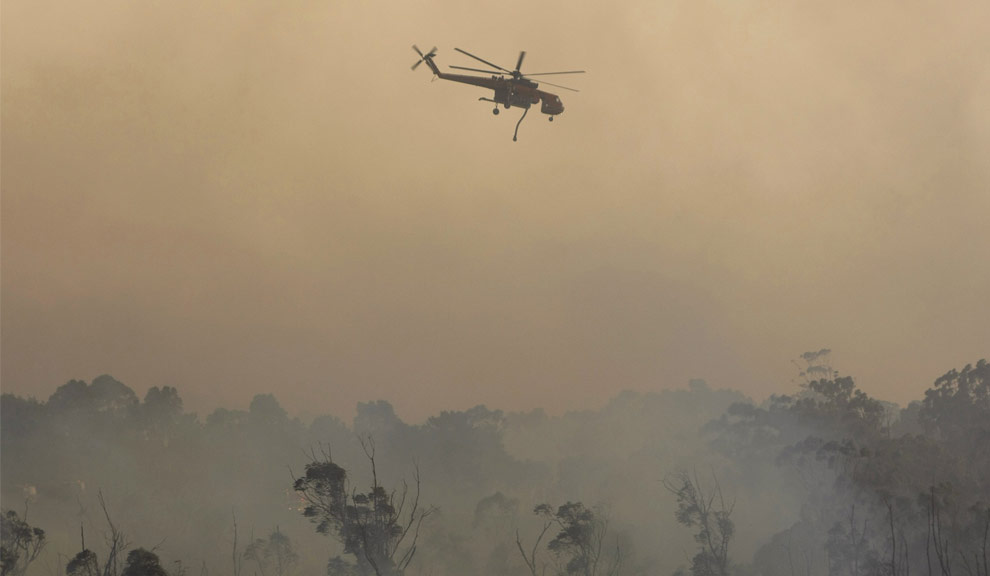
A firefighter watches a helicopter water bomb a bushfire approaching the town of Peats Ridge, north of Sydney, on February 8, 2009. Australia is naturally the most fire-prone continent on earth but climate change appears to be making the wildfires that regularly sweep across the country more ferocious, scientists said.

A Austrália é o continente naturalmente mais propenso a grandes fogos florestais, mas as mudanças climáticas estão a tornar estes cataclismos demasiado constantes e ferozes, dizem os cientistas.

No entanto, segundo as últimas notícias, há suspeitas de que muitos dos fogos têm mão humana, e o primeiro-ministro australiano acusa os pirómanos de «homicídio em massa».


Australia
credits: AP
via Boston News


The state of Victoria in southern Australia has recently been hit with hundreds of bush fires during a record-breaking heatwave - temperatures well above 38°C (100°F). Unfortunately, these fires have proved to be the deadliest in Australian history, with at least 166 deaths reported so far. The fires mostly appear to have been started by lightning - however a few appear to have been arson, and are under investigation - entire towns being declared crime scenes. Twenty-four fires are still burning, and authorities warn that the death toll will likely rise. (...)

Impossível ficar indiferente perante tantas fotografias chocantes que evitámos aqui publicar! Esperemos que os responsáveis criminosos sejam apanhados e severamente punidos !


Geração 'green'

09.02.2009

Nota: Algumas fotografias do post original não foram encontradas, pelo que tivemos que substituir por fotos alusivas aos incêndios. Conservámos, no entanto, o texto original.

Actualizado em 15 Junho 2011
Updated June 15, 2023

Creative Commons License